
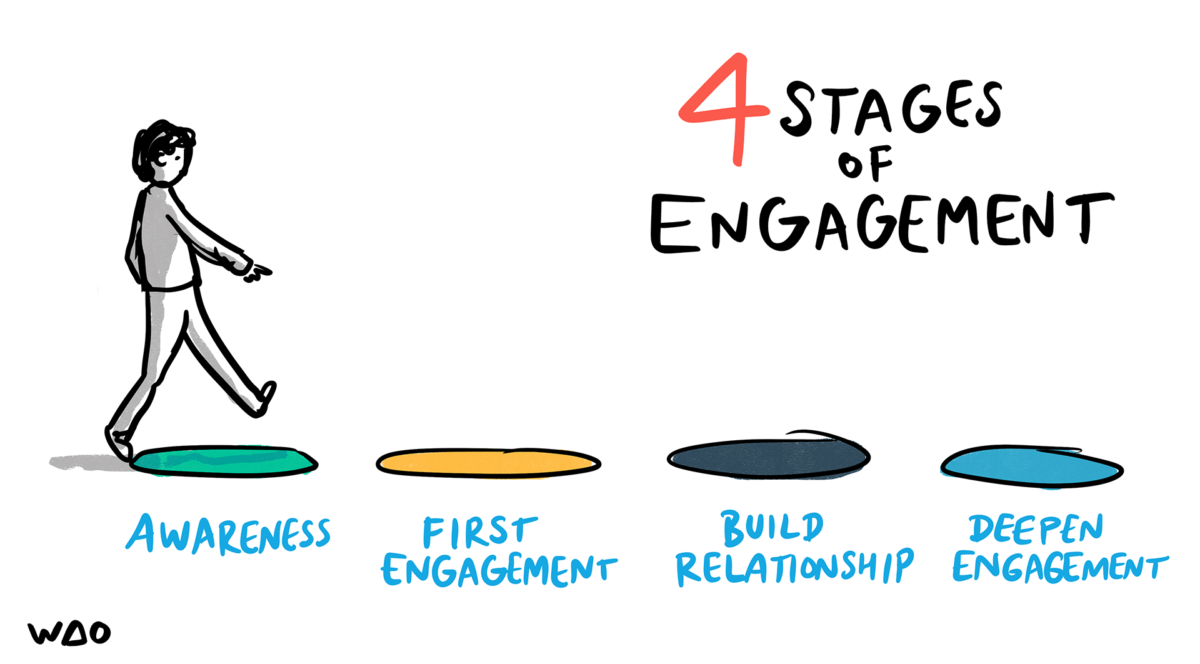
Are your members actively experiencing the value of your membership? Or just paying for it?
For associations, chambers of commerce, and member-based organizations, engagement is the leading indicator of retention, revenue stability, and long-term relevance.
That’s because engagement is the primary driver of member retention. When your members interact frequently, use their benefits, and experience real value – they renew at the end of the term. When they’re not engaged, they leave, often quietly.
That’s why it’s so important for member organizations to measure and manage engagement effectively.
Engagement vs. Retention: A Critical Distinction
These terms are often used interchangeably, but they serve different purposes:
- Engagement = a leading KPI that tells you how often and how deeply members interact
- Retention = a lagging KPI that tells you how many members renew
If you wait to measure retention, you’re reacting to outcomes.
If you measure engagement, you can predict and influence those outcomes in advance.
Why Measuring Engagement Is So Important
Without clear engagement data, organizations operate on assumptions:
- “Members seem satisfied”
- “Members say they’re happy”
- “Events are well attended”
- “Open rates look good”
But these signals can be misleading.
What really matters is:
- How many members are actively engaged
- How often they interact
- Whether they are using what you provide
Members don’t renew based on awareness—they renew based on experienced value.
Subscription Business vs. Association Engagement KPIs
There are similarities between associations and subscription businesses—but also key differences.
Here’s where they overlap:
- Retention rate
- Churn rate or attrition rate
- LTV (lifetime value)
- Engagement frequency
Where Subscription Businesses and Associations Differ
1. Multi-Dimensional Value vs. Single Product
Subscription businesses typically measure engagement around a single product or platform.
Associations and chambers deliver value across:
- Events
- Content
- Benefits
- Advocacy
- Community
Association engagement is more distributed and more complex.
2. Multiple Decision Makers
In chambers and member-based organizations:
- A business may be the member
- Multiple employees may engage
Association engagement must be measured across organizations, not just individuals.
3. Emotional + Functional Value
Subscription-based businesses often focus on utility.
Associations and chambers must balance:
- Practical value (tools, services)
- Relational value (community, connection, identity)
4. Lower Usage Visibility
In software, usage is easy to track.
In associations:
- Some engagement is offline
- Some activity is passive
- Some activity is indirect
Associations require a broader measurement framework.
Start With a Solid Strategy: Define Engagement Clearly
Before selecting KPIs, define what engagement actually means for your organization.
At a strategic level, engagement includes:
- Frequency – how often members interact
- Depth – how meaningful those interactions are
- Breadth – how many services or programs they use
High engagement means members are:
- Interacting regularly
- Using multiple offerings
- Deriving real value
Three Levels of Engagement
1. Passive Engagement
- Reading emails
- Browsing content
- Following updates
2. Active Engagement
- Attending events
- Downloading resources
- Participating in programs
3. Embedded Engagement
- Using benefits regularly
- Integrating services into their operations
- Relying on the organization consistently
The goal is to move members toward embedded engagement, where value is continuous.
Core KPIs for Measuring Engagement
High-performing associations and chambers track a mix of these metrics:
- Active Member Rate
% of members engaging in at least one meaningful activity
- Event Participation Rate
% of members attending events
- Benefit Utilization Rate
% of members actually using benefits
- Engagement Frequency
Average number of interactions per member
- Member Touchpoint Index
Total interactions across all channels
- Digital Engagement Metrics
- click-through rates
- portal logins
- downloads
- Net Promoter Score (NPS)
Member satisfaction and advocacy
Three High-Impact KPIs (With Formulas)
1. Active Member Rate
Formula:
Active Members ÷ Total Members × 100
Example:
600 ÷ 1,000 = 60%
Insight:
This is your top-level engagement health metric.
Low numbers signal future retention risk.
2. Benefit Utilization Rate
Formula:
Members Using Benefits ÷ Total Members × 100
Example:
300 ÷ 1,000 = 30%
Insight:
This reveals whether your offerings are actually valuable—or just available.
3. Engagement Frequency
Formula:
Total Interactions ÷ Total Members
Example:
2,000 ÷ 1,000 = 2 interactions per member/month
Insight:
Higher frequency strongly correlates with higher retention.
What Engagement Data Typically Reveals
Once tracked properly, most organizations discover:
- A minority of members drive most engagement
- A large segment is inactive or lightly engaged
- Some benefits are widely promoted—but rarely used
This creates a clear opportunity:
Increasing engagement among inactive members produces outsized gains in retention and financial stability.
Tactics to Improve Measurable Engagement
1. Focus on High-Frequency Value
Programs used monthly outperform those used annually.
2. Prioritize Utility Over Information
Members engage more with tools that:
- Solve problems
- Save money
- Reduce risk
3. Segment Your Members
Tailor engagement by:
- Industry
- Size
- Tenure
4. Strengthen Onboarding (First 90 Days)
Ensure new members:
- Activate a benefit quickly
- Attend an event
- Understand how to access value
The Role of High-Usage Benefits
One of the biggest shifts in engagement strategy is toward benefits that are used each and every month.
Why this matters:
- Frequency builds habit
- Habit builds reliance
- Reliance drives retention
Telehealth as an Engagement Driver
Telehealth is a strong example of a high-frequency, high-value benefit.
Research suggests that approximately 60–70% of routine doctor visits can be handled virtually, making it:
- Convenient
- Cost-effective
- Widely applicable
Because it addresses real, ongoing needs, telehealth can:
- Increase interaction frequency
- Expand engagement beyond events
- Create tangible, recurring value
From Engagement to Embedded Value: Bundled Platforms
Many associations and chambers are moving toward integrated benefit platforms, which combine:
- Telehealth
- Mental wellness
- Prescription savings
- Legal services
- Identity protection
Platforms like Allutional represent this approach by offering multiple services in one place, which can increase the likelihood that members engage regularly across different needs.
Turning Measurement into Action
Tracking engagement is only valuable when it’s actionable.
Ask:
- Who is not engaging?
- What programs drive repeat usage?
- Where is there a gap between enrollment and actual use?
Then:
- Double down on high-performing programs
- Improve or replace low-performing ones
- Target outreach to disengaged members
Final Thought
Engagement is the clearest signal of whether your organization is delivering real value.
Associations, chambers of commerce, and member-based organizations that measure engagement effectively are better positioned to:
- Improve retention
- Strengthen member relationships
- Grow non-dues revenue
Because ultimately, engagement answers a simple but critical question:
Are your members actively experiencing your value—or just paying for it?